
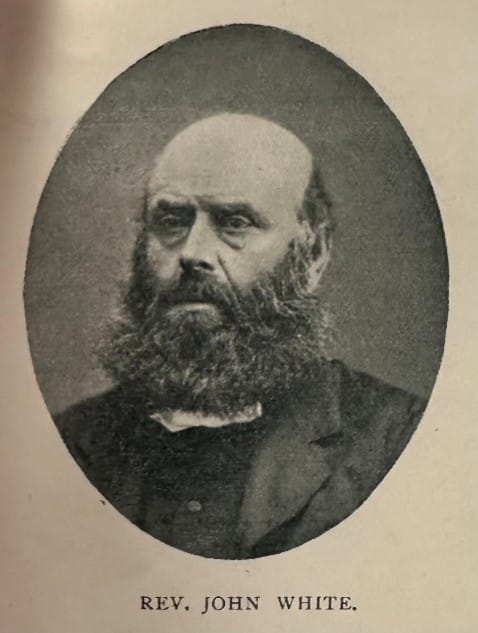
“Is it St Anne’s or Mr White’s, Sir?” said a car man to Rev James Wylie in 1896. Even 15 years after his death, the Donegall Street Congregational Church was still affectionately attributed to the former minister who preached on Donegall Street for over a decade. Perhaps it is no surprise, as Reverend John White presided over the Church’s most prosperous period in its history!
We don’t know much about John White’s early life, but from a book discovered in a floorsafe at his former church, we know he was the son of a farmer from Aughnacloy in Co. Tyrone. It was in this rural setting that Rev White would start his career as a minister, conducting meetings in the farmhouses around his family home. From Aughnacloy, Rev White found himself preaching across Ireland before notably coming to Belfast in 1859, where he would play a prominent role in the 1859 revival in the city, alongside a future ecclesiastical neighbour in Belfast, Rev ‘Roaring’ Hugh Hanna.
After the Ulster Revival, (a period between 1857-1859 which saw nearly 100,000 people convert to Christianity,) White went to Dublin where he remained until 1865. Up until this point, White had been a Methodist minister, taking after his father who had been a member of the Primitive Wesleyan Methodist Society, but during his time in Dublin, White found himself increasingly at odds with the Society to which he had committed much of his life thus far, deciding to leave the Methodist denomination at the end of 1864. This was a stroke of luck for a somewhat rudderless Donegall Street Congregational church, who been without a pastor for nearly a year, and who saw Rev White as a suitable successor. It is also testament to the impact White made 5 years previously during his time in Belfast!
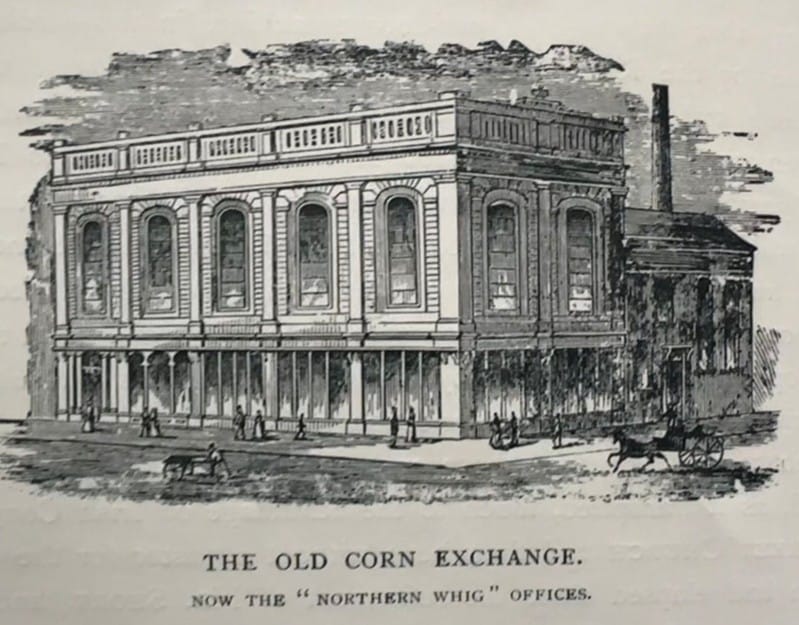
At the beginning of Rev White’s ministry in August 1865, the church boasted 70 members, but the congregation quickly swelled to number several hundred. This was thanks to Rev White’s ability to connect with those who found themselves disconnected or ostracised from other denominations. In November of 1865, he decided to take a series of special services held at the Old Corn Exchange building in Belfast (now the Northern Whig) to try to appeal to people of the working-classes and those who found themselves without a church to call their own. People began to flock to these services, and “every Sunday afternoon brought him a crowd of eager hearers, who were attracted by his striking personality, and who listened with close attention to his eloquent and powerful appeals”.
In a time when ministers such as the infamous firebrand ‘Roaring’ Hugh Hanna, were popular for their sectarian views and divisive rhetoric, the Rev. White was a breath of fresh air in comparison, offering a more restrained and less combative message, with an emphasis on “preaching … of love and peace” rather than using the platform “for the promotion of bigotry and narrow-minded sectarianism”. His services around Belfast became so popular, that the halls and venues were at capacity, and as a result, Donegall Street Congregational Church’s attendance numbers skyrocketed, with many new members, excited to hear what Rev. White had to say come Sunday morning. It was also an indication of his fervent work ethic, and his desire to go above and beyond for his congregation, as he also held weekly cottage prayer meetings which were also quite popular amongst the congregation, eventually having to meet at nine different houses to fulfil the congregation’s needs with over 400 attendees. He was also a strong advocate for the Church’s increased involvement in their Sunday school program, and eventually greatly improved their numbers and community involvement.
With this sudden swell of the congregation, came the problem of where to put them! Although the church had been newly redesigned (opened in 1860), thanks to White’s efforts, it was no longer able to seat all the worshippers. Redevelopment was necessary, and so, in 1868, the church established a committee to oversee the expansion. It was estimated that the works would cost £700, but the church still owed a further £246 from the previous development. It was agreed that a goal of £900 was to be the target (just under £90,000 today).
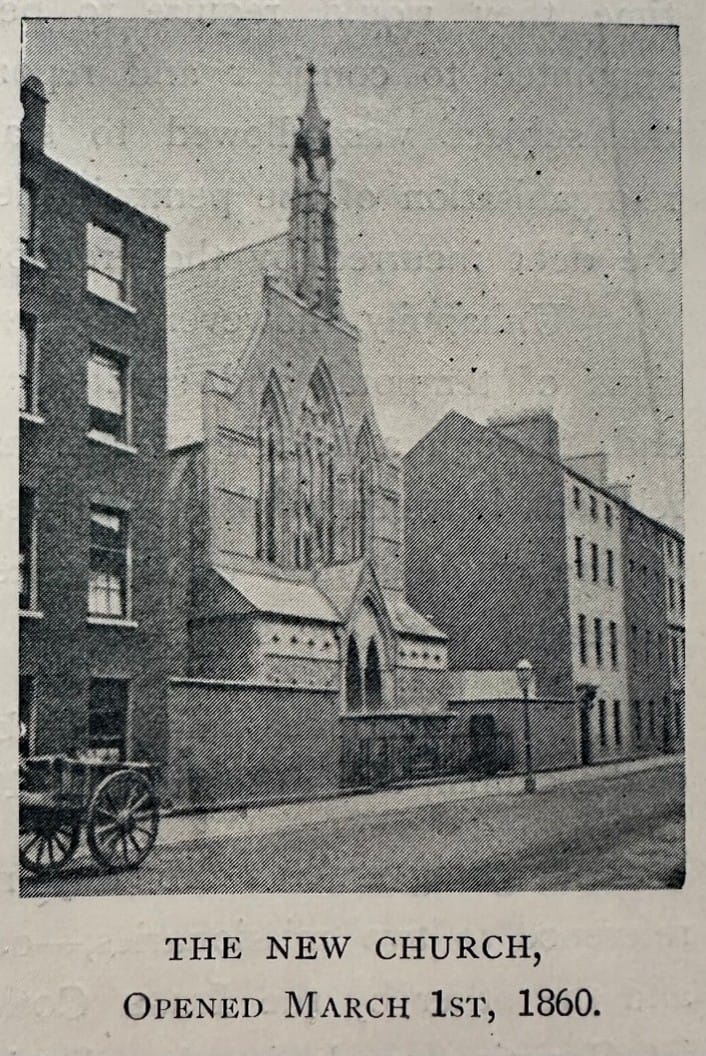
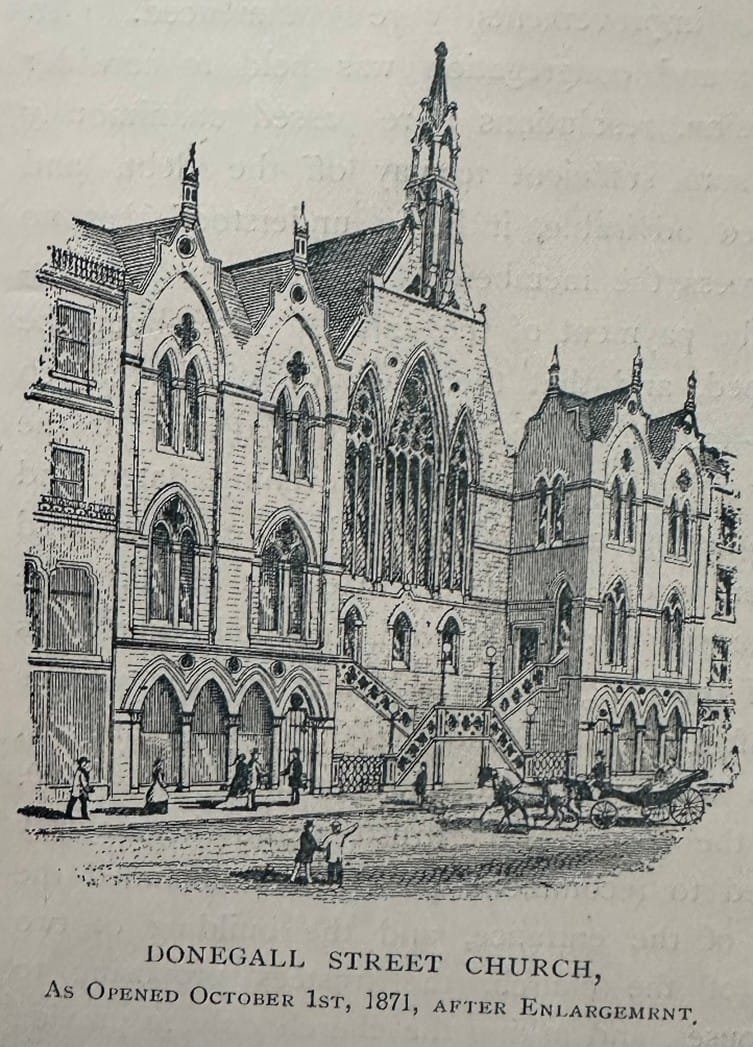
Finally in the autumn of 1871, after many meetings and much fundraising, the church opened with their extension. Even with the alterations made, many church-goers had to stand in the aisle with more being turned away. And so, it was decided to establish a satellite church.
Having just funded an expansion, funding an entirely new church, posed a significant challenge, but the leaders of the congregational church were adamant that if a new church building was to be opened, it would be “opened free of debt”. A site on Cliftonpark Avenue was identified as the ideal location, and the new church was opened on Sunday 23rd July, 1876. It remained a place of worship for over 100 years. It is clear from the rapid expansion of the Congregational church in Belfast that White’s work from Donegall Street was having a notable impact on the town of Belfast
“From all that is said it will be abundantly evident that Donegall Street Church in Mr. White’s days was the centre of marvellous activity. It had its ramifications in every part of the town, and the influence of its godly and devoted minister was felt throughout the whole community”
Archibald, 1902- A Century of Congregationalism: The story of Donegall St Congregational Church
Rev White made an impact within Belfast and the wider community in any way he could. He tended to the sick, donated to the poor, and participated in every church event possible. He was tireless in his support of the people of Belfast, to such a degree that it attracted concern from those closest to him– when a friend expressed fears that White was working himself too hard, he replied “Well, what matters it? If the Lord has work for me to do, and I do it and I get home to heaven ten years sooner than otherwise, isn’t it all the better?”. His friend’s assessment of his work ethic did prove accurate.
In the autumn of 1880, John White’s health began to falter Fearing his imminent death and concerned about the fate of the church he loved so dearly, he said “tell the people if they value my ministry among them, and have ever derived any blessing from me, that they stand together and do not neglect the services. My only desire to get better is that I may have further opportunity of benefiting the people and preaching to them the same gospel I have so long lived to preach”.
He gave his last series of sermons on the 10th of April in 1881, his last prayer meetings on the 11th, became bed-ridden on the 12th, and passed away on the 14th. He was 63 years old. His funeral was a sight to behold– people from all over Belfast, from all different communities, denominations and faiths, and walks of life, came together en masse to celebrate the life and mourn the death of a beloved and respected citizen. Often described as a good natured and kind hearted man, his funeral had one of the largest attendances in the city’s history. His funeral was presided over by preachers from all different denominations: A fitting tribute for a man who had so fervently advocated for peace and unity throughout his life.
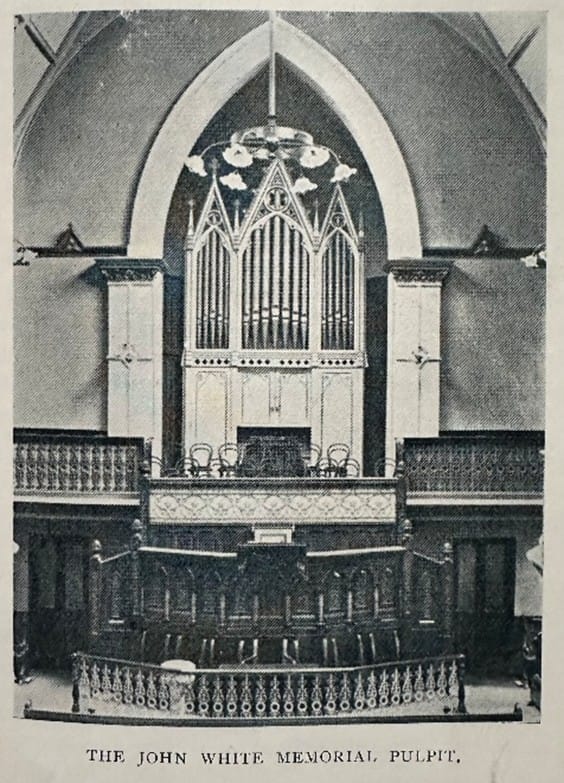
The Reverend White was remembered for many years after in Belfast, with the Church on Donegall Street still affectionately called ‘Mr White’s’, even a decade after his death. Inside, an oak pulpit was installed in his honour. Even now, after fires and the Belfast Blitz there still stands the White memorial pulpit, (now on its 3rd iteration!). A fitting memorial to a man who gave so much to the church, and helped shape it in such a way that it could weather the coming storms in the 20th Century, and whose legacy is still prominent for all to see inside “his” church, nearly 150 years later:
“…Give my warmest love to my dear people. My heart is with them wherever I am. Donegall Street is my home, and my heart is there”
Rev John White- 1881
Personal note from the author, B.N: Initially, before researching the Reverend John White, I expected his story to be like many others I have researched– To encapsulate a life in the best way you can, sum it up, and commemorate a life well-lived. But the more I read about him, the more I felt the immense impact he left on Belfast. Though he died nearly 150 years ago, I feel as I knew the man, through the account of him written by his congregation. I’ve heard it said that if you want to know someone, look at their friends, and it became evident through the words and memories of his many friends that he was a genuinely good person. In any time of divisiveness or uncertainty, to hear of a voice of peace, unity, and kindness brings me hope. The power of history was shown to me yet again through this project. I find that history has a way to awaken the essence of those who have come before us, as we look to make sense of the people who walk the same streets as we do, and, in turn, better understand the places where we make our home . The Reverend White’s good-hearted nature showed how at its core– we are meant to connect, to remember, to care for others. I hope this brief story of his life, and his death, bring you the hope and comfort it brought me.
About the Author:
Brooke Norgaard is a MA student at Queen’s University Belfast in the Public History program. She obtained her undergraduate degree in History at the University of Sioux Falls with a focus in history teaching. Her focus areas are women’s history, the Salem Witch Trials, dark tourism, and carceral history. Norgaard has spent years working at various history museums in the United States and is currently an intern for the North Belfast Heritage Cluster. All research has been conducted to a high academic standard and has been fully referenced. If you would like to know more about a story or piece of research, or if you wish to tell us about your own story, email us at: archiveproject@nbheritagecluster.org